Deciding where to stay in District 1? Pick the Dong Khoi–Nguyen Hue core for comfort, Ben Thanh for convenience, Pham Ngu Lao and Bui Vien for budget and nightlife, or Tan Dinh and Da Kao for a quiet local feel. Beds run from about 150,000 VND to 3.5 million VND and up nightly (as of July 2026).
- District 1 was officially dissolved on July 1, 2025. The same streets now belong to four wards: Sai Gon, Ben Thanh, Tan Dinh and Cau Ong Lanh.
- Hotels in the former District 1 cost about 30–50% more than similar rooms in neighboring districts (as of August 2026).
- Nightly prices range from 150,000–300,000 VND (about US$6–12) for a dorm bed to about 3.5 million VND (about US$140) and up for luxury hotels (as of July 2026).
- Ben Thanh Market (Chợ Bến Thành) is about 7 km from Tan Son Nhat airport, a ride of 25–45 minutes by car and up to 1 hour at rush hour (as of October 2026).
- Metro Line 1 has three underground stations in the old District 1: Ben Thanh, Opera House and Ba Son. It does not go to the airport.
- Bui Vien stays loud until about 2–4 a.m., so light sleepers should book elsewhere or pick a back-facing room on a high floor.
- Peak tides from late October to December 2026 can briefly flood riverside and low-lying streets.


Photos: 1) Terrazzo, CC BY 2.0; 2) Steffen Schmitz, CC BY-SA 4.0; 3) Gurval Le Bouter, CC BY 2.0; 4) Steffen Schmitz, CC BY-SA 4.0; via Wikimedia Commons.
Does District 1 Still Exist After the 2025 Merger?
No, District 1 no longer exists as an official unit, but everyone still uses the name. From July 1, 2025, Ho Chi Minh City absorbed Binh Duong and Ba Ria-Vung Tau, the district level of government was abolished, and the enlarged city was reorganized into 168 commune-level units.
The former District 1 (Quận 1) is now four wards. Sai Gon ward (Phường Sài Gòn) covers Dong Khoi, Nguyen Hue, Le Thanh Ton and the riverfront. Ben Thanh ward (Phường Bến Thành) takes in the market and the Pham Ngu Lao and Bui Vien backpacker streets. Tan Dinh ward (Phường Tân Định) covers Tan Dinh and part of Da Kao. Cau Ong Lanh ward (Phường Cầu Ông Lãnh) includes the Co Giang, Cau Kho and Nguyen Cu Trinh area.
For a visitor, almost nothing changes on the ground. You will still see “District 1” or “Quận 1” on hotel listings, booking sites, map apps, business cards and shop signs, and drivers understand it without a second thought. The only time the new names matter is when an address on a booking confirmation shows a ward you do not recognize. If it says Sai Gon, Ben Thanh, Tan Dinh or Cau Ong Lanh ward, you are in what this guide, and most locals, still call District 1.
Which Part of District 1 Is Best for First-Time Visitors?
For most first-time visitors, the best base is the area between Ben Thanh Market and Nguyen Hue Walking Street (Phố đi bộ Nguyễn Huệ), because the main sights, most tour pickups and two metro stations are all within about a 15-minute walk.
That said, District 1 is not one uniform neighborhood. It is roughly eight small areas, each with its own noise level, price band and character. A street that suits a group of friends on a three-night party stop is the wrong choice for a family with a toddler, even though the two may be only ten minutes apart on foot.
The table below compares the eight areas covered in this guide. Walking times are estimates at an easy pace in the heat, so treat them as a guide, not a promise.
| Area | Best for | Feel / noise | Typical nightly price (as of July 2026) | Walk to Ben Thanh Market |
|---|---|---|---|---|
| Dong Khoi / Nguyen Hue / Le Loi | Comfort, families, couples, first visits | Polished colonial core; lively evenings, calmer late at night | Mid-range 1.2–2.0 million VND; luxury from about 3.5 million VND | About 8–15 minutes |
| Ben Thanh Market area | Convenience, short stays, tours | Busy traffic by day, quieter in side streets | 700,000–2.0 million VND | About 1–5 minutes |
| Pham Ngu Lao / Bui Vien | Budget, nightlife, solo travelers | Loud until about 2–4 a.m. | Dorms 150,000–300,000 VND; rooms 350,000–1.0 million VND | About 10–15 minutes |
| Le Thanh Ton “Little Japan” | Business, long stays, food lovers | Compact alleys; some busy late | 1.2–2.0 million VND and up | About 15–20 minutes |
| Ton Duc Thang riverfront / Ba Son | River views, families, business | Upscale; wide road with traffic noise | From about 3.5 million VND for river-view hotels | About 20–25 minutes, or two metro stops |
| Da Kao / Tan Dinh | Couples, repeat visitors, quiet stays | Residential and local | 500,000–2.0 million VND | About 25–30 minutes, or 5–10 minutes by Grab |
| Co Giang / Co Bac / Nguyen Thai Binh | Tight budgets, longer stays | Quiet alleys, street food | 350,000–1.0 million VND | About 5–20 minutes depending on the street |
| Nguyen Trai / Cong Quynh / Ton That Tung | Mid-budget value, local food | Local shopping streets, calmer than Bui Vien | 500,000–2.0 million VND | About 15–20 minutes |
If you have only two or three nights, pay a little more to be central and save your time and energy for the city. If you are staying a week or longer, the quieter edges such as Tan Dinh or Co Giang begin to make more sense, because a short Grab ride to the center costs very little and you sleep better.
Is Dong Khoi, Nguyen Hue and Le Loi Worth the Higher Price?
Yes, for a first visit of a few days the Dong Khoi, Nguyen Hue and Le Loi core is worth paying extra for, because it is the most walkable and polished part of the city. It is also the most expensive part of District 1.
This is the old colonial heart of Saigon. Dong Khoi runs from Notre-Dame Cathedral (Nhà thờ Đức Bà) down to the Saigon River, passing the Saigon Opera House (Nhà hát Thành phố) on the way. Nguyen Hue runs parallel to it as a broad pedestrian boulevard, and Le Loi links both of them back to Ben Thanh Market. The city’s best-known luxury hotels cluster here, including the Caravelle, the Rex, the Majestic and the Park Hyatt, along with rooftop bars, cafes in old apartment blocks and river walks at the bottom of the street.
Mid-range hotels in this core typically run 1.2–2.0 million VND (about US$48–80) a night, and luxury rooms start from about 3.5 million VND (about US$140), as of July 2026. Smaller hotels sit in the side streets between the big names, so you do not have to pay top rates to sleep here.


Photos: 1) Suicasmo, CC BY-SA 4.0; 2) HĐ, CC BY-SA 4.0; 3) Rick McCharles, CC BY 4.0; 4) Kevin Rutherford, CC BY-SA 2.0; 5) Suicasmo, CC BY-SA 4.0; via Wikimedia Commons.
From a hotel in this area, nearly everything on a first-timer’s list is a short walk. The Opera House is at your door, and the cathedral and the Central Post Office (Bưu điện Trung tâm Sài Gòn) are a few blocks north. Notre-Dame has been under restoration since 2017. Gold-plated crosses were installed on its towers on March 19, 2026, and completion is expected around 2027 or later, so for now plan to view it from outside.
Noise here is moderate. Nguyen Hue fills with people in the evening, especially on weekends and holidays, and rooftop bars play music late. For a quieter but still central room, look north of Le Loi or down near the river, and ask for a room that does not face the walking street.
Is the Ben Thanh Market Area the Most Convenient Base?
Yes, the streets around Ben Thanh Market are the most convenient base in District 1 for a short stay. You are close to the market, the museums, a metro station and most tour pickup points, and prices are lower than on Dong Khoi.
The market itself is open roughly 6:00–18:00 (as of November 2026) and acts as a compass point for the whole center. From its front gate, it is about 8–10 minutes on foot to Nguyen Hue Walking Street, about 15 minutes to the Opera House, about 15 minutes to Notre-Dame Cathedral and the Central Post Office, and about 12–15 minutes to Independence Palace (Dinh Độc Lập). The War Remnants Museum (Bảo tàng Chứng tích Chiến tranh) is farther, at about 20 minutes, and Bui Vien is about 10–15 minutes in the other direction.
Independence Palace charges 80,000 VND for an adult ticket and opens about 7:00–18:00, and the War Remnants Museum opens about 7:30–17:30 (both as of November 2026). With a base near the market, you can visit one in the morning, come back to rest through the midday heat, and walk out again in the late afternoon.
Ben Thanh is also the practical choice if you plan day trips. Most city tours and day tours to the Cu Chi Tunnels or the Mekong Delta collect guests from hotels in District 1, and a central address near the market makes pickup simple. If you would like a guide for your first day, operators such as Ho Chi Minh Tours run city tours that start from this part of town, so you can usually be collected at your hotel lobby instead of crossing the city to a meeting point.
The trade-off is traffic. The roads around the market carry heavy motorbike flow from early morning, and street-facing rooms on lower floors pick up horn noise. Hotels in the smaller side streets a block or two back are noticeably calmer. Expect to pay roughly 700,000 VND to 2.0 million VND a night here, depending on the standard of the hotel (as of July 2026).
Is Bui Vien Too Noisy to Sleep?
For light sleepers, yes: rooms directly on Bui Vien are too noisy, because the bars play loud music until about 2–4 a.m. In the alleys a few minutes away, however, most people sleep fine, and this is still the cheapest central area for a bed.
Pham Ngu Lao and Bui Vien form the city’s long-standing backpacker quarter, packed with hostels, bars, tour desks, laundry services and cheap places to eat. Bui Vien Walking Street (Phố đi bộ Bùi Viện) is closed to traffic in the evenings and is busiest on weekends, when the music from opposing bars overlaps and the crowd fills the road.
Prices are the draw. A dorm bed costs 150,000–300,000 VND (about US$6–12), a private room with a shared bathroom 350,000–500,000 VND, and a budget room with its own bathroom 500,000–700,000 VND (as of July 2026). Tour desks on every block make it easy to book buses and day trips at short notice.


Photos: 1) Bahnfrend, CC BY-SA 4.0; 2) Bahnfrend, CC BY-SA 4.0; 3) Bahnfrend, CC BY-SA 4.0; 4) Bahnfrend, CC BY-SA 4.0; 5) Alessandro Loss, CC BY-SA 2.0; via Wikimedia Commons.
If you want the price and the social scene without the noise, three choices help. First, book in an alley off Pham Ngu Lao or a parallel street, not on Bui Vien itself. Second, ask for a back-facing room on a high floor. Third, bring earplugs anyway, because bass travels through old buildings.
This area is not a good fit for families with young children or for anyone who needs to be up early and rested. It suits solo travelers, groups of friends and anyone who plans to be out late in any case.
What Is Le Thanh Ton “Little Japan” Like to Stay In?
Le Thanh Ton’s “Little Japan” is a compact, food-focused pocket that suits business travelers and longer stays more than sightseeing-heavy first trips. It sits just north of the Dong Khoi core around Le Thanh Ton and Thai Van Lung streets.
The narrow alleys here are lined with Japanese izakaya, ramen counters and small bars, and the surrounding blocks hold many serviced apartments. That mix makes it practical if you want a kitchenette, a washing machine and dinner within a two-minute walk. Because it is part of Sai Gon ward, you are still close to the Opera House and Nguyen Hue, and about 15–20 minutes on foot from Ben Thanh Market.
Noise depends heavily on the exact alley. Some lanes are busy late into the night with bar and restaurant traffic, while a building one street over can be quiet by 10 p.m. Check the map carefully and ask the property which way the room faces. Prices are similar to the mid-range band of the central core, about 1.2–2.0 million VND a night and up (as of July 2026), with serviced apartments often offering better value for stays of a week or more.
Should You Stay on the Ton Duc Thang Riverfront near Ba Son?
Stay on the Ton Duc Thang riverfront if you want an upscale room with a river view and do not mind being slightly removed from the market end of the center. It is a good choice for families and business travelers with a higher budget.
Ton Duc Thang runs along the Saigon River from the bottom of Dong Khoi up toward the Ba Son area. Upscale river-view hotels line the road, Bach Dang Wharf (Bến Bạch Đằng) park gives you a place to walk at sunset, and Ba Son station puts you on Metro Line 1. The Majestic, at the corner of Dong Khoi, marks the southern end of this strip.
There are two things to know. Ton Duc Thang is a wide road, and traffic noise reaches lower floors, so a high floor is worth requesting. And the riverside is the part of the center most exposed to peak tides late in the year, which can leave water on low-lying streets for a short time. Hotels themselves are built for this, but your walk may involve a detour on those days.
Ben Thanh Market is about 20–25 minutes away on foot, or two stops on the metro from Ba Son. Rooms in the river-view hotels generally sit in the luxury band, from about 3.5 million VND a night (as of July 2026).
Are Da Kao and Tan Dinh Good for a Quiet, Local Stay?
Yes, Da Kao and Tan Dinh are the best parts of the old District 1 for a quieter, residential stay. They sit at the northern end, away from the tourist core, with tree-lined streets, family-run restaurants and far fewer tour groups.
The landmark here is Tan Dinh Church (Nhà thờ Tân Định), widely known as the Pink Church for its bright pink facade. Tan Dinh Market (Chợ Tân Định) is across the road, and the Jade Emperor Pagoda (Chùa Ngọc Hoàng) is nearby in Da Kao. Around them you will find coffee shops, noodle stalls and small boutique hotels in residential lanes.


Photos: 1) Tungwuqing, CC BY-SA 4.0; 2) Kevin Rutherford, CC BY-SA 2.0; 3) Gary Todd, CC0; 4) trungydang, CC BY 3.0; via Wikimedia Commons.
The cost of the calm is distance. From Tan Dinh Church it is about 25–30 minutes on foot to Ben Thanh Market, or about 5–10 minutes by Grab. There is no metro station in this part of the ward, so you will rely on ride-hailing or walking. Most visitors who stay here take a Grab to the center in the morning and another back in the evening.
That routine works well for couples, repeat visitors and anyone staying five nights or more. It is less ideal for a two-night first visit, when every half hour counts. Room rates cover a wide range, from about 500,000 VND for a simple guesthouse room to about 2.0 million VND for a boutique hotel (as of July 2026).
Where Are the Cheapest Quiet Rooms in District 1?
The cheapest quiet rooms in District 1 are in the alleys around Co Giang, Co Bac and Nguyen Thai Binh streets, south of the backpacker quarter. Small guesthouses here charge budget prices without the all-night music of Bui Vien.
Co Giang and Co Bac are in Cau Ong Lanh ward, in a neighborhood where residents still outnumber visitors. Guesthouses sit in narrow lanes off the main streets, and the area is known for street food stalls that set up in the late afternoon. Nguyen Thai Binh lies closer to Ben Thanh Market and offers a similar mix a shorter walk from the center.
A private room with a shared bathroom costs 350,000–500,000 VND, a budget room with a private bathroom 500,000–700,000 VND, and a better-equipped budget hotel room 700,000–1,000,000 VND (as of July 2026). Many travelers on longer trips choose this area because weekly spending on food and laundry is also lower than in the core.
Two cautions apply. Some of these streets can flood briefly after heavy rain, so pack sandals during the rainy season and ask your host which way to walk when it pours. And alley guesthouses are often tall, narrow buildings, so check whether there is an elevator if stairs are a problem for you.
Nguyen Trai, Cong Quynh and Ton That Tung: Mid-Budget Value
The streets around Nguyen Trai, Cong Quynh and Ton That Tung offer some of the best mid-budget value in District 1. They lie just west of Bui Vien, close enough to walk to the bars and far enough to sleep.
Nguyen Trai is a local fashion street lined with clothing and shoe shops, and the nearby blocks are full of everyday Vietnamese food: broken rice, noodle soups, grilled pork and dessert stalls aimed at residents and office workers. The feel is calmer than Bui Vien and more local than Dong Khoi.
Hotels here range from simple budget rooms at about 500,000 VND to comfortable mid-range places at up to about 2.0 million VND a night (as of July 2026). Ben Thanh Market is about 15–20 minutes away on foot. For a first-time visitor who finds the core too expensive and Bui Vien too loud, this is the sensible middle option.
How Much Does It Cost to Stay in District 1?
A night in District 1 costs from about 150,000 VND for a dorm bed to 3.5 million VND or more for a luxury hotel (as of July 2026). On average, hotels here run about 30–50% pricier than comparable rooms in neighboring districts (as of August 2026).
The typical price bands, all as of July 2026, are as follows:
- Dorm bed: 150,000–300,000 VND (about US$6–12), mostly around Pham Ngu Lao and Bui Vien.
- Private room, shared bathroom: 350,000–500,000 VND, in guesthouses in the backpacker and Co Giang alleys.
- Budget room, private bathroom: 500,000–700,000 VND, across the southern and western streets.
- Better budget hotel: 700,000–1,000,000 VND, common near Ben Thanh and Nguyen Trai.
- Mid-range hotel: 1.2–2.0 million VND (about US$48–80), in the core, Little Japan and Tan Dinh.
- Luxury hotel: from about 3.5 million VND (about US$140), on Dong Khoi, Nguyen Hue and the riverfront.
Add 30–50% to these figures at Tet (Lunar New Year), over the April 30–May 1 holiday and in Christmas week. Rooms in the core also sell out early for those dates, so book well ahead if your trip overlaps them.
Is the District 1 premium worth it? For a short first visit, usually yes. You save on transport and, more importantly, on time. For stays of a week or more, the cheaper streets inside District 1 give you most of the convenience at close to the prices of outer districts.
Where to Stay in District 1 for Families, Couples, Nightlife, Budget and Business
The right area depends mostly on who you are traveling with and how late you plan to stay out. Here is a quick match for the five most common types of trip.
- Families: Dong Khoi and Nguyen Hue, or the Ton Duc Thang riverfront. Sidewalks are wider, the walking street and Bach Dang Wharf park give children space to move, and larger hotels have pools and family rooms.
- Couples: Dong Khoi for rooftop bars and river walks, or Tan Dinh and Da Kao for cafes, quiet lanes and a slower pace.
- Nightlife: Bui Vien and Pham Ngu Lao. You can walk home at any hour, and nobody expects you at breakfast.
- Budget: the alleys off Pham Ngu Lao for dorms and social hostels, or Co Giang and Co Bac for quiet private rooms.
- Business: Le Thanh Ton, Ton Duc Thang and Le Loi, close to office towers, serviced apartments and reliable taxis.
Groups with mixed priorities often do best near Ben Thanh Market. It sits between the nightlife streets and the polished core, so the night owls and the early risers each have a walk of about 10–15 minutes in opposite directions.
How Do You Get from Tan Son Nhat Airport to District 1?
The easiest way from Tan Son Nhat International Airport (Sân bay Tân Sơn Nhất) to District 1 is a GrabCar, which costs 150,000–250,000 VND and takes 25–45 minutes (as of October 2026). The airport is about 7 km from Ben Thanh Market, and the trip can stretch to an hour at rush hour.
All prices and times in the table are as of October 2026.
| Option | Price | Time | Notes |
|---|---|---|---|
| Bus 109 | 15,000–20,000 VND | 45–60 minutes | Runs every 20–30 minutes from about 5:30; the simplest bus for visitors |
| Bus 152 | 6,000–10,000 VND, plus a luggage fee | 50–70 minutes | Runs about 5:00–18:00; the cheapest option |
| GrabBike | 90,000–140,000 VND | 25–45 minutes | Motorbike taxi; only practical with a small backpack |
| GrabCar | 150,000–250,000 VND | 25–45 minutes, up to 1 hour at rush hour | Fixed price shown in the app; costs more in rain |
| Xanh SM taxi | Shown in the app before you book | 25–45 minutes, up to 1 hour at rush hour | Electric taxis operating 24 hours |
| Metered taxi (Vinasun, Mai Linh) | 170,000–280,000 VND, plus a 10,000–15,000 VND airport fee | 25–45 minutes, up to 1 hour at rush hour | Use the official taxi line and check the meter is running |
If you land late at night, a ride-hailing car or a metered taxi from the two established companies is the simplest choice, since Bus 152 stops running in the early evening. Have your hotel’s name and street address ready on your phone, ideally with the Vietnamese spelling, and tell the driver “Quận 1” if there is any confusion about the new ward names.


Photos: 1) Kateru Zakuro, CC BY 4.0; 2) Anime123654, CC BY-SA 4.0; 3) Hwi.padam, CC BY-SA 4.0; via Wikimedia Commons.
Hotels deep in an alley may not be reachable by car. In that case the driver will stop at the alley entrance and you walk the last stretch, so it helps to know the alley number in advance. Many small hotels will send a staff member to meet you if you message them when you leave the airport.
Can You Use Metro Line 1 from a District 1 Hotel?
Yes, you can, and it is useful if your hotel is near one of the three central underground stations: Ben Thanh, Opera House or Ba Son. Metro Line 1 runs from Ben Thanh to Suoi Tien with 14 stations and opened in December 2024.
The full ride takes about 30 minutes end to end. Fares are 7,000–20,000 VND depending on distance, a one-day pass is 40,000 VND and a three-day pass is 90,000 VND, and you can tap a bank card at the gates. Trains run from about 5:00 to 22:00, and until 23:00 on weekends and holidays (all as of August 2025).
Inside the old District 1, the metro is mainly a way to skip the heat between the market end and the river end of the center. Ben Thanh to Opera House to Ba Son is a short hop that saves a sweaty 20–25 minute walk. Beyond that, the line heads east and north-east out of the center, which is handy for seeing a different side of the city.
What the metro does not do is connect to the airport. There is no airport link on Line 1, so you will still need a bus, taxi or ride-hailing car on arrival and departure. The line also does not reach Tan Dinh, Bui Vien or the Co Giang area, so do not choose a hotel in those places expecting a station at the door.
Noise, Flooding and Safety: What Should You Watch For?
The three things to watch for in District 1 are late-night noise near bar streets, short floods in the rainy and peak-tide season, and motorbike snatch theft of phones and bags. None of them should put you off, and all three are easy to manage.
Noise
The loudest streets are Bui Vien, the bar alleys of Little Japan and the sections of Nguyen Hue near rooftop venues. Traffic noise is strongest on wide roads such as Ton Duc Thang and around the Ben Thanh roundabout. Everywhere else, the main sound is motorbikes, which start early. A high floor and a back-facing room solve most of it.
Flooding
The rainy season runs from May to November and usually brings short, heavy afternoon downpours instead of all-day rain. Peak tides add a second risk from late October to December 2026, for example around November 25–27, when riverside and low-lying areas may flood. Water generally drains within a few hours. Carry sandals, keep electronics in a dry bag, and allow extra time for rides, since Grab prices and waiting times rise in the rain.
Safety
District 1 is generally safe to walk around, including in the evening. The main risk is phone and bag snatching by thieves on motorbikes, particularly around Ben Thanh and Bui Vien. Keep your phone away from the road side when you check a map, wear a cross-body bag in front of you, and use Grab instead of flagging unknown vehicles. In an emergency, the police number is 113 and the ambulance number is 115.
Where to Stay in District 1: How Do You Choose the Right Room?
Once you have picked an area, choose the room itself by checking four things: whether it faces an alley or a street, which floor it is on, whether it has a window, and what the check-in process involves. In District 1 these details affect your sleep more than the hotel’s rating does.
Alley or street-facing. Hotels in an alley (hẻm) are quieter and often cheaper, but cars may not be able to reach the door and the lane can be dim at night. Street-facing hotels are easier to find and to reach with luggage, at the cost of more traffic noise.
High floor. Motorbike and bar noise drops noticeably as you go up. Ask for the highest floor available, and confirm there is an elevator, since many narrow budget buildings have five or six floors and stairs only.
Windows. Windowless rooms are common in budget hotels in District 1, because buildings are narrow and deep. They are dark and very quiet, which some people like, but others find them stuffy. Listings do not always make this clear, so look for the words “no window” or “interior room” and ask if you are unsure.
Check-in and passport registration. Accommodation providers in Vietnam must declare a foreign guest’s temporary residence on arrival using passport details, under Circular 87/2026/TT-BCA issued in mid-2026. Handing over your passport briefly at check-in is normal. Staff will photograph or scan it and should return it within a few minutes.
- phòng yên tĩnh – quiet room
- Phòng có cửa sổ không? – Does the room have a window? (cửa sổ = window)
- hẻm – alley
- Có thang máy không? – Is there an elevator?
- tầng cao – high floor
- Bao nhiêu một đêm? – How much per night?
A short message to the hotel before you book, asking for a quiet room with a window on a high floor, usually gets a clear answer. If the reply is vague, that tells you something too.
After Saigon, a Beach Break in Vung Tau
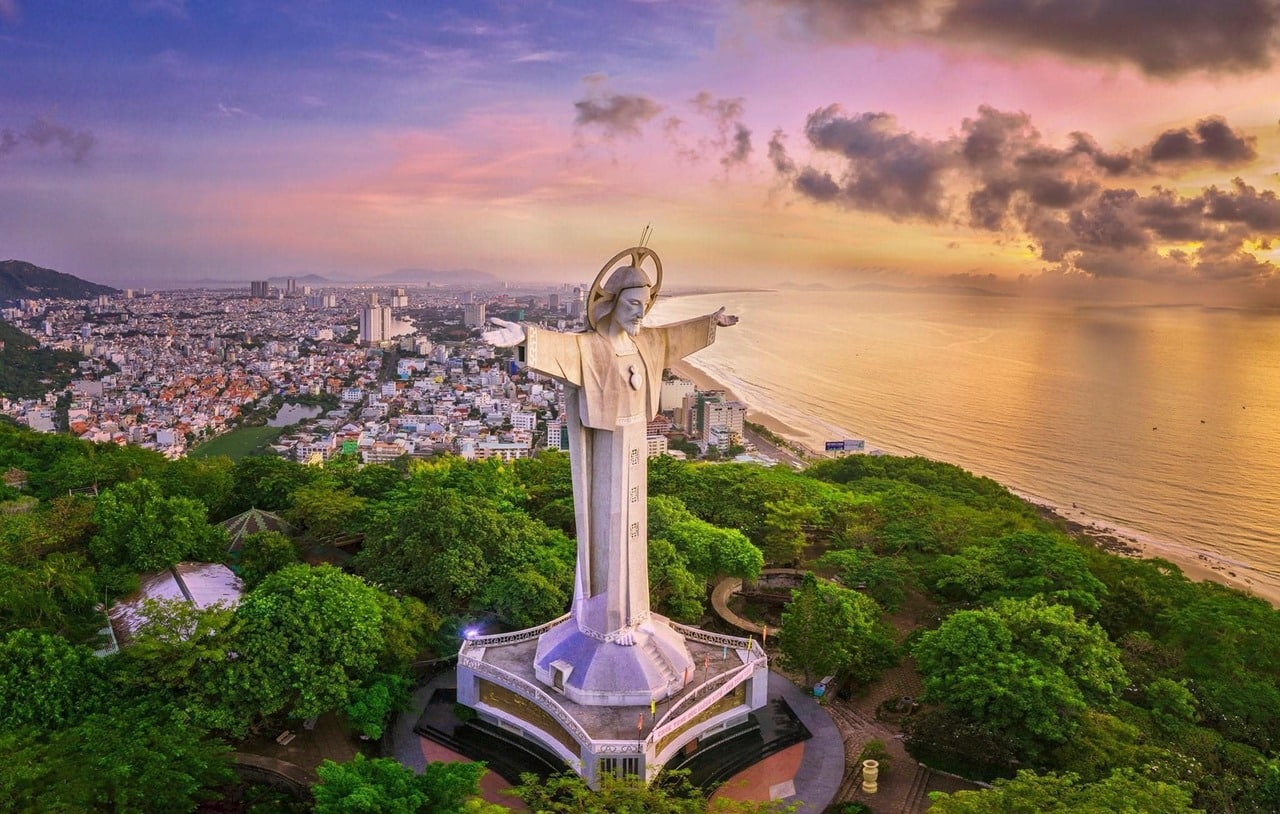
After a few days of traffic and heat in the center, many visitors add one or two nights by the sea. The closest beach town is Vung Tau, which since the July 2025 merger is officially part of Ho Chi Minh City itself.
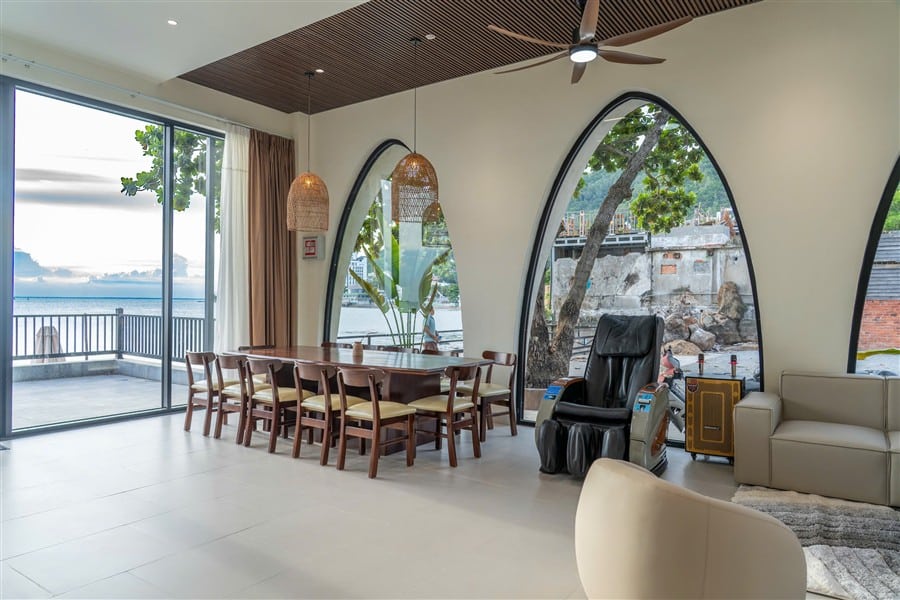
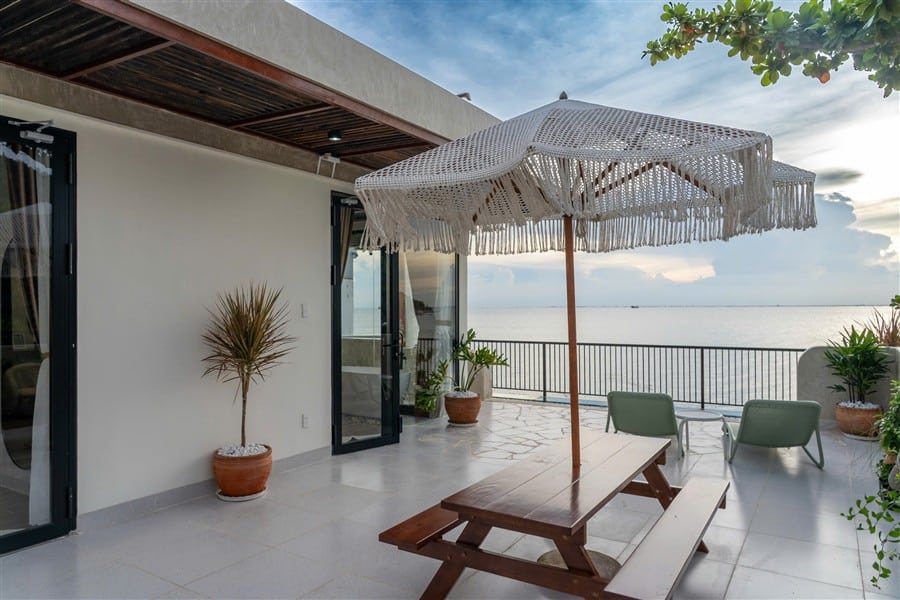
Vung Tau is around 2 hours from District 1 by road or around 2 hours by fast boat. That makes it realistic as a weekend add-on at the end of a city stay, with no flight needed. Our team at King Villa rents private villas there, which suits families and groups who want their own pool and kitchen after several nights in hotel rooms.
To plan the days, see our two-day Vung Tau weekend itinerary, and for a breakdown of the town’s neighborhoods, read our guide on where to stay in Vung Tau.


Photos: 1) Willyvu, CC BY-SA 4.0; 2) Pieceofmetalwork, CC BY-SA 4.0; 3) Bem photography, CC BY 2.0; via Wikimedia Commons.
Frequently Asked Questions
Is District 1 the best area to stay in Ho Chi Minh City for a first visit?
Yes, for most first-time visitors the former District 1 is the best base. The main sights, the walking streets, most tour pickup points and three metro stations are concentrated here. Hotels cost about 30–50% more than in neighboring districts (as of August 2026), but on a short trip the time you save usually justifies the difference.
Is District 1 still called District 1?
Not officially, but in everyday use it is. Since July 1, 2025, the area has been divided into Sai Gon, Ben Thanh, Tan Dinh and Cau Ong Lanh wards. Hotels, booking sites, map apps and drivers still say “District 1” or “Quận 1,” so you can keep using the old name when searching or giving directions.
How many nights should I stay in District 1?
Two to three nights is enough for most first visits. That gives you one full day for the central sights on foot, one day for a trip such as the Cu Chi Tunnels or the Mekong Delta, and an evening or two for food and the walking streets. Add a night if you arrive on a long-haul flight.
What is the cheapest area to stay in District 1?
The cheapest areas are the Pham Ngu Lao and Bui Vien backpacker streets and the Co Giang and Co Bac alleys. Dorm beds cost 150,000–300,000 VND and private rooms with a shared bathroom 350,000–500,000 VND (as of July 2026). Choose Co Giang or Co Bac if you want low prices without late-night bar noise.
Is it better to stay near Ben Thanh Market or Nguyen Hue?
Stay near Ben Thanh Market for convenience and lower prices, or near Nguyen Hue for a more polished setting. The two are only about 8–10 minutes apart on foot, so the choice is mostly about budget and atmosphere. Ben Thanh is handier for tour pickups, while Nguyen Hue is closer to the Opera House and the river.
Is Bui Vien safe at night?
Bui Vien is generally safe at night, but it is crowded and petty theft does happen. Phone and bag snatching by motorbike is the main risk in and around the street. Keep your phone away from the road, wear your bag across your body in front, watch your drinks, and book a Grab home if your hotel is not within walking distance.
Can I walk everywhere in District 1?
You can walk between most central sights, since the core is compact. Ben Thanh Market to the Opera House or Notre-Dame Cathedral takes about 15 minutes, and Independence Palace about 12–15 minutes. Heat, humidity and broken sidewalks make longer walks tiring, so for Tan Dinh or the War Remnants Museum many visitors take a short Grab ride instead.
Does the metro go from the airport to District 1?
No, Metro Line 1 has no airport link. From Tan Son Nhat you need a bus, taxi or ride-hailing car. Bus 109 costs 15,000–20,000 VND and takes 45–60 minutes, while a GrabCar costs 150,000–250,000 VND and takes 25–45 minutes, or up to an hour at rush hour (as of October 2026).
Do hotels in Vietnam keep your passport?
Hotels need your passport details but should not need to keep the passport for your whole stay. Accommodation providers must declare foreign guests’ temporary residence on arrival under Circular 87/2026/TT-BCA. Handing your passport over briefly at check-in so staff can scan or photograph it is normal. Ask for it back once they are done.
Does District 1 flood in the rainy season?
Some streets flood briefly, but it rarely disrupts a trip for long. The rainy season runs from May to November with short afternoon downpours, and peak tides from late October to December 2026 can affect riverside and low-lying areas. Streets around Co Giang and Co Bac can also flood for a short time after heavy rain.
When are District 1 hotels most expensive?
Hotels are most expensive at Tet (Lunar New Year), over the April 30–May 1 holiday and during Christmas week. Expect rates 30–50% above normal in those periods (as of July 2026), with central rooms selling out early. Booking several weeks ahead, or staying slightly outside the Nguyen Hue core, helps keep costs down.
How do I get from District 1 to Vung Tau?
You can reach Vung Tau from District 1 by road or by fast boat, and each takes around 2 hours. Which one suits you depends on your luggage, your group size and how you feel about boats. Schedules change with season and weather, so confirm departure times a day or two before you plan to travel.
Sources
- Tuoi Tre News: Ho Chi Minh City metro line adds more trips, extends operating hours on weekends
- VietnamPlus: Key milestone reached in restoration of Saigon Notre-Dame Cathedral
- Viet Nam News: HCM City faces prolonged flooding risk towards year-end as high tides rise
- Viet Nam News: Accommodation providers required to register foreign guests’ temporary residence immediately upon arrival
- Vietcetera: A post-merger guide to Ho Chi Minh City
- LuatVietnam: Resolution 1685/NQ-UBTVQH15 on the reorganization of commune-level administrative divisions of Ho Chi Minh City in 2025
Written by the King Villa Vung Tau team. Last updated November 17, 2026. Prices, hours and transport details change often, so please check them again before you travel.